Beginner Musical Instruments for Seniors

Older woman sitting on a chair playing a ukulele in a cozy indoor setting.
Older woman learning to play the ukulele as a beginner musical instrument.

Learning a musical instrument later in life can be a wonderful way to try something new, express yourself creatively, and add more enjoyment to your everyday routine. You don’t need past musical experience, perfect rhythm, or years of formal lessons to get started. Curiosity and a willingness to practice are enough.

For seniors, there are plenty of instruments that are relatively easy to approach. Some are lightweight and portable, while others require very little finger strength or musical knowledge. The right choice depends on the kind of music you enjoy, your budget, your physical comfort, and how you hope to play.

Maybe you’ve always wanted to play songs around the house. Perhaps you want to join a community music group. Or maybe you’re simply looking for a relaxing hobby that gives you something new to learn.

Here are some of the best beginner-friendly musical instruments for seniors, along with practical tips for choosing one and making your first few weeks of practice enjoyable.

Continue reading “Beginner Musical Instruments for Seniors”
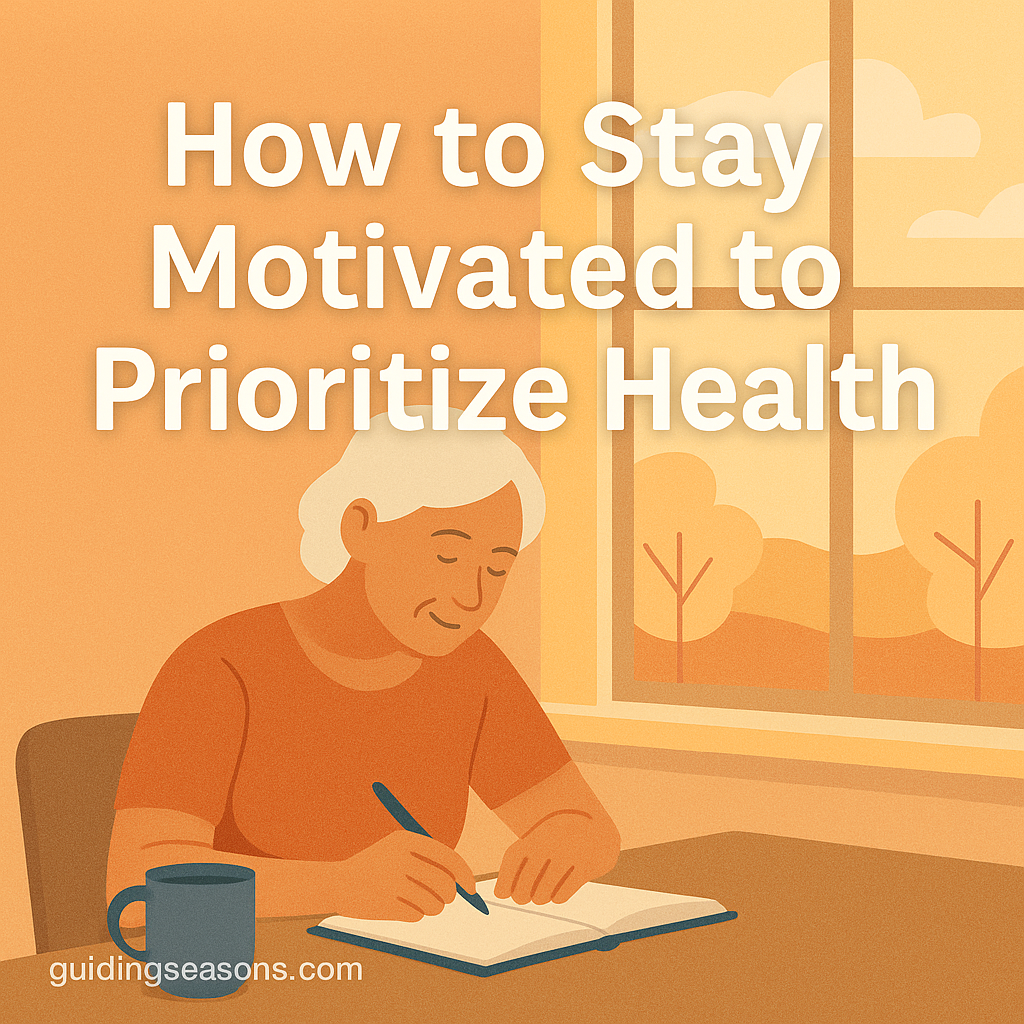

How to Stay Motivated to Prioritize Health

Older woman writing in a notebook while sitting by a bright sunlit window.
Older woman journaling by a sunlit window to stay focused on her health goals.

Staying motivated to take care of your health can become more challenging as life changes. Retirement, changing energy levels, chronic conditions, caregiving responsibilities, sleep changes, and shifts in daily routine can all affect how easy it feels to exercise, eat well, stay socially connected, and keep up with medical care.

The good news is that healthy aging does not require perfect discipline.

In most cases, long-term health is supported by consistent habits that are realistic enough to repeat. A short walk you take regularly can be more valuable than an ambitious workout plan you abandon after two weeks. A simple breakfast routine can be more useful than a complicated diet you dislike.

The National Institute on Aging emphasizes that physical activity can benefit older adults by supporting strength, balance, mood, independence, and the ability to perform everyday activities. It also encourages older adults to choose activities they enjoy and gradually build physical activity into their routines. (nia.nih.gov)

Motivation is helpful, but you do not have to feel motivated every day to take care of yourself. What matters more is creating an environment and routine that make healthy choices easier to continue.

Here are practical ways to stay engaged with your health over the long term.

Continue reading “How to Stay Motivated to Prioritize Health”

Legal Resources Seniors Should Know

Senior woman reviewing legal documents at a desk with symbols of justice nearby.
Senior woman reviewing important legal documents and resources.

As people get older, legal questions can become more important. Estate planning, healthcare decisions, Social Security benefits, long-term care, housing, financial protection, and powers of attorney are just a few areas where seniors may eventually need reliable information or professional assistance.

The problem is knowing where to start.

Legal services can seem complicated or expensive, and many older adults may not realize that free and low-cost resources are available in their communities. Some problems require an attorney, while others may be resolved with help from a government agency, benefits counselor, legal aid organization, or senior advocacy program.

This guide explains some of the most useful legal resources seniors and their families should know about and how to decide where to turn when legal questions arise.

Continue reading “Legal Resources Seniors Should Know”

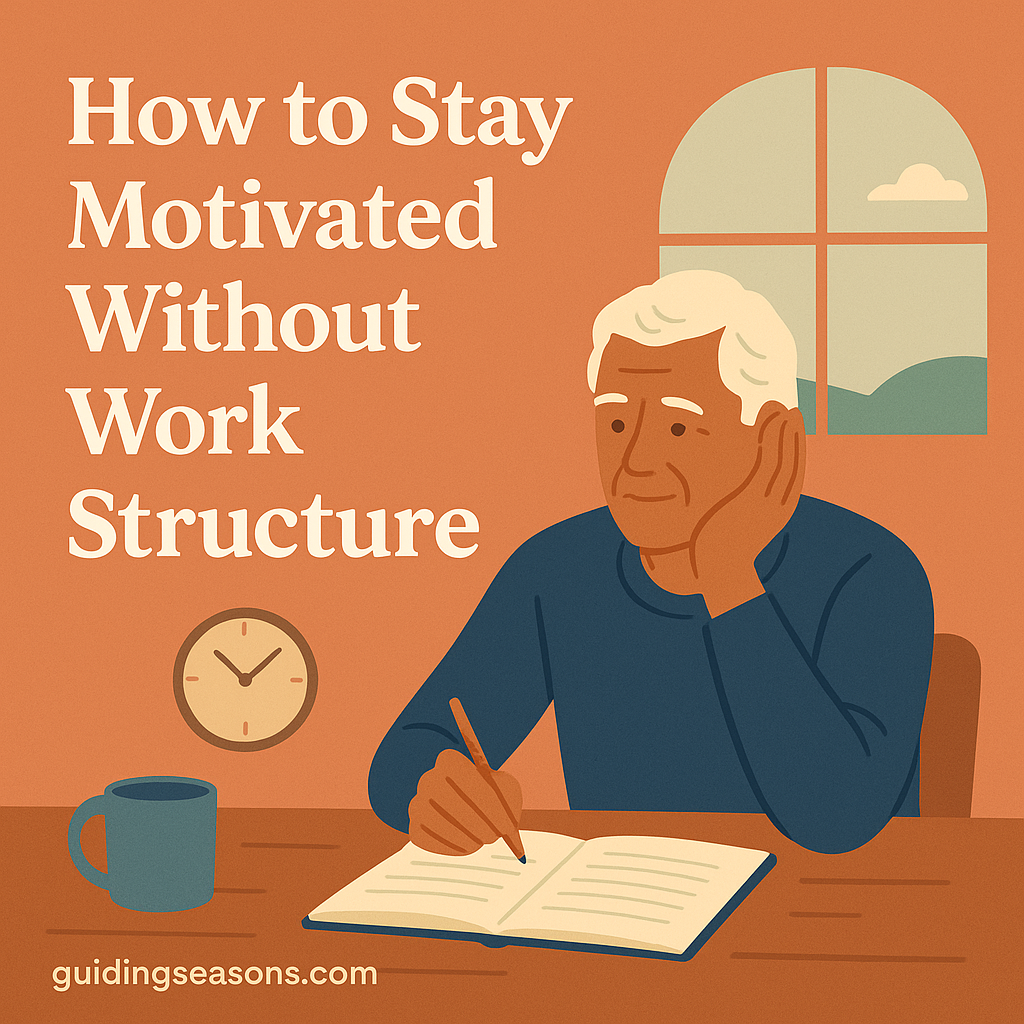
How to Stay Motivated Without Work Structure

Older man writing in a notebook while reflecting at a table with a clock and window nearby.
An older man reflects on his thoughts while writing in a notebook at a quiet table.

Whether you’re newly retired, transitioning out of a long career, or simply adjusting to a lifestyle with more free time, losing the built-in structure of work can feel surprisingly disorienting.

For decades, much of your day may have been decided for you. You knew when to wake up, where you needed to be, what needed to get done, and when the workday was over. Even if you occasionally dreamed about having an empty calendar, that structure provided something important: direction.

Retirement changes that.

Many people enjoy their newfound freedom but also notice periods of lower motivation, boredom, reduced social interaction, or uncertainty about how to spend their time.

You might wake up and think, What do I actually need to do today?

The answer may be: nothing.

At first, that can feel wonderful. After a while, however, completely unstructured days can begin to feel repetitive.

The solution isn’t necessarily to make yourself busy again or recreate your old work schedule. Instead, you can develop a flexible rhythm that gives your days enough structure to feel purposeful while preserving the freedom you’ve earned.

Here’s how to stay motivated when a traditional workday is no longer organizing your life.

Continue reading “How to Stay Motivated Without Work Structure”

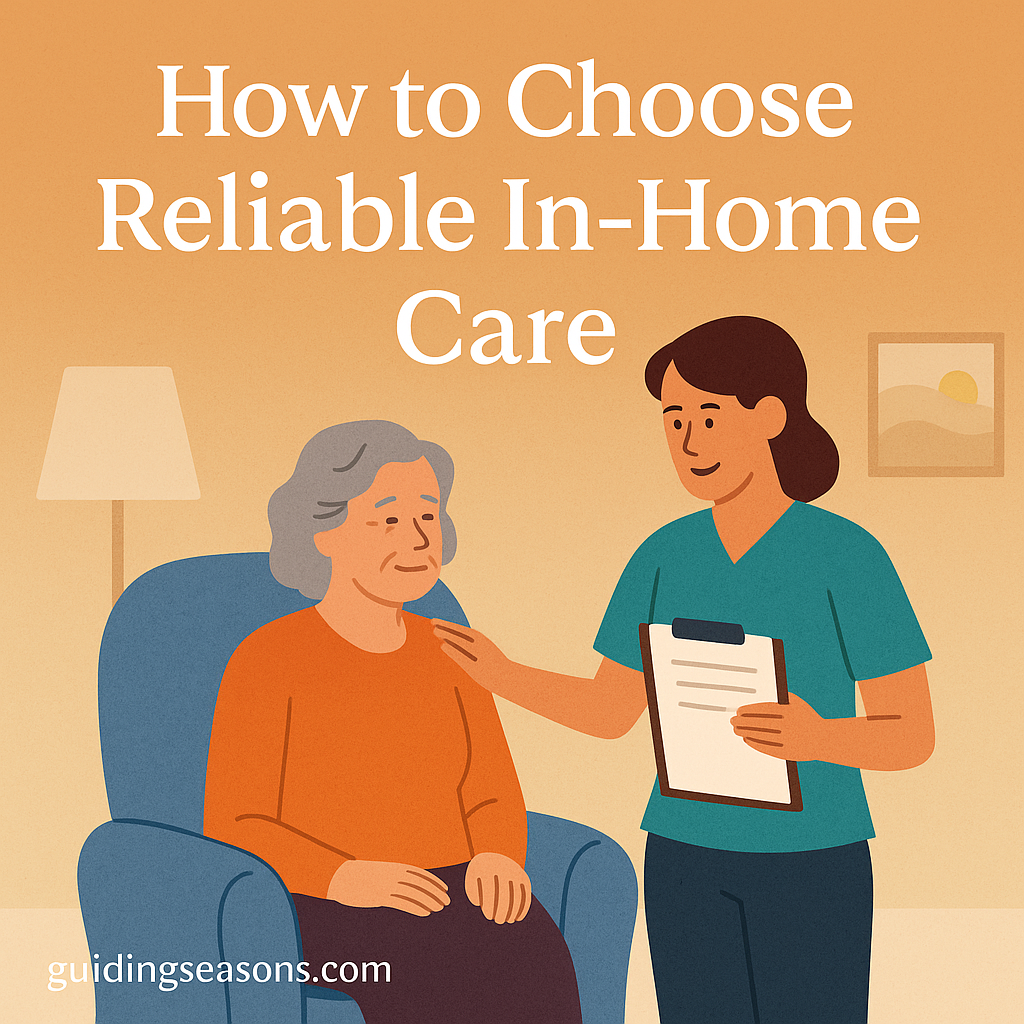
How to Choose Reliable In-Home Care

Caregiver speaking with a senior woman sitting in an armchair during an in-home care visit.
Caregiver supporting a senior woman during an in-home care visit.

Finding reliable in-home care is one of the most important decisions families may make as a loved one ages. The right caregiver can provide comfort, safety, companionship, and practical assistance while helping an older adult continue living at home. The wrong match can create stress, inconsistent care, or unnecessary risks.

Choosing care can also feel overwhelming. Families may encounter home care agencies, independent caregivers, home health agencies, companion services, and other options that sound similar but provide very different levels of assistance.

The key is to slow down and evaluate what your loved one actually needs before choosing a provider.

This guide walks you through what to look for, what questions to ask, and how to make a more informed decision when choosing in-home care.

Continue reading “How to Choose Reliable In-Home Care”

Understanding Life Insurance for Seniors

Senior man reviewing a life insurance document with the title Understanding Life Insurance for Seniors.
Senior man reviewing a life insurance document as part of planning for the future.

Life insurance isn’t just a financial product—it can provide peace of mind. For many seniors, life insurance helps protect loved ones from unexpected costs, leave a financial legacy, or make sure final expenses don’t become a burden.

But with different policy types, age limits, health requirements, and pricing structures, knowing what type of coverage to choose can feel overwhelming.

This guide breaks down life insurance in simple, senior-friendly language so you can better understand your options and make a confident, informed decision.

Continue reading “Understanding Life Insurance for Seniors”

Cruise Options Seniors Love

Senior couple enjoying a cruise ship deck at sunset.
Senior couple enjoying a peaceful sunset on a cruise ship deck.

Cruising has become one of the most appealing ways for older adults to travel. Comfortable accommodations, transportation between destinations, dining, entertainment, and organized excursions are all brought together in one trip. Instead of repeatedly packing and unpacking or arranging transportation between cities, you can settle into your cabin and let the ship take you from one destination to the next.

Cruising is especially popular among older travelers. According to AARP’s 2026 Travel Trends research, interest in international cruising increases with age: international cruise trips account for about 28% of planned international trips among travelers age 70 and older, compared with 15% among travelers ages 50 to 59.

With so many cruise lines, ship sizes, destinations, and travel styles available, however, choosing the right cruise can feel overwhelming.

The best choice depends on what you want from the experience. Some travelers enjoy large ships filled with restaurants and entertainment, while others prefer quiet river cruises, intimate small ships, cultural experiences, or luxury service.

Here’s a closer look at cruise options seniors often enjoy and what to consider before booking.

Continue reading “Cruise Options Seniors Love”

How to Learn New Technology Skills Confidently

Older woman sitting at a table learning how to use a tablet, surrounded by simple technology-themed icons in a warm indoor setting, with the title “How to Learn New Technology Skills Confidently” displayed above
An older woman confidently learns new technology skills on a tablet, supported by a calm, encouraging environment.

Technology changes quickly. Phones get new features, websites redesign their menus, apps move buttons around, and devices that once seemed simple can suddenly look unfamiliar.

That can make learning technology feel frustrating, especially if you didn’t grow up using computers, smartphones, or the internet every day.

But being unfamiliar with technology doesn’t mean you can’t learn it.

Technology skills are learned skills. Just like cooking a new recipe, using a new appliance, or learning a different route across town, they become easier through practice and repetition.

In fact, research involving older adults has found that structured digital-literacy training can improve both skills and confidence. One 2024 study involving an eight-week training program for older adults reported improvements in digital literacy and confidence after participants received regular instruction and hands-on support.

The goal isn’t to understand every new device or application. It’s to learn the technology that helps you do things you actually care about.

That might mean joining a video call with family, sending photos, checking an appointment online, using maps, reading the news, or learning how to protect yourself from online scams.

Here are practical ways to build those skills without making the process unnecessarily stressful.

Continue reading “How to Learn New Technology Skills Confidently”

How to Begin Journaling for Reflection

Older woman with short white hair journaling peacefully at a table in a warm, cozy room with soft lighting, a plant, and the title “How to Begin Journaling for Reflection” displayed above.
An older woman writes in her journal in a calm, cozy space, illustrating how reflection through journaling can support emotional well-being.

Journaling is often associated with productivity, goal-setting, habit tracking, or documenting everything that happens during the day. But later in life, journaling can serve a quieter and more personal purpose.

It can become a place to think.

A journal gives you space to reflect on experiences, notice changes in your perspective, work through complicated emotions, preserve meaningful memories, and consider what matters most to you now.

You don’t need to be a good writer.

You don’t need perfect grammar.

And you certainly don’t need to fill several pages every morning.

Reflective journaling can be as simple as writing a few sentences about something that stayed on your mind during the day.

Research on expressive writing suggests that putting thoughts and emotions into words can sometimes help people process stressful experiences. The American Psychological Association notes that expressive writing has been studied as a way of working through difficult experiences and improving psychological well-being, although results can vary from person to person and situation to situation.

The goal, then, isn’t to use journaling as a cure for stress or emotional difficulties.

It’s to create a private space where you can listen to yourself.

Here’s how to begin.

Continue reading “How to Begin Journaling for Reflection”

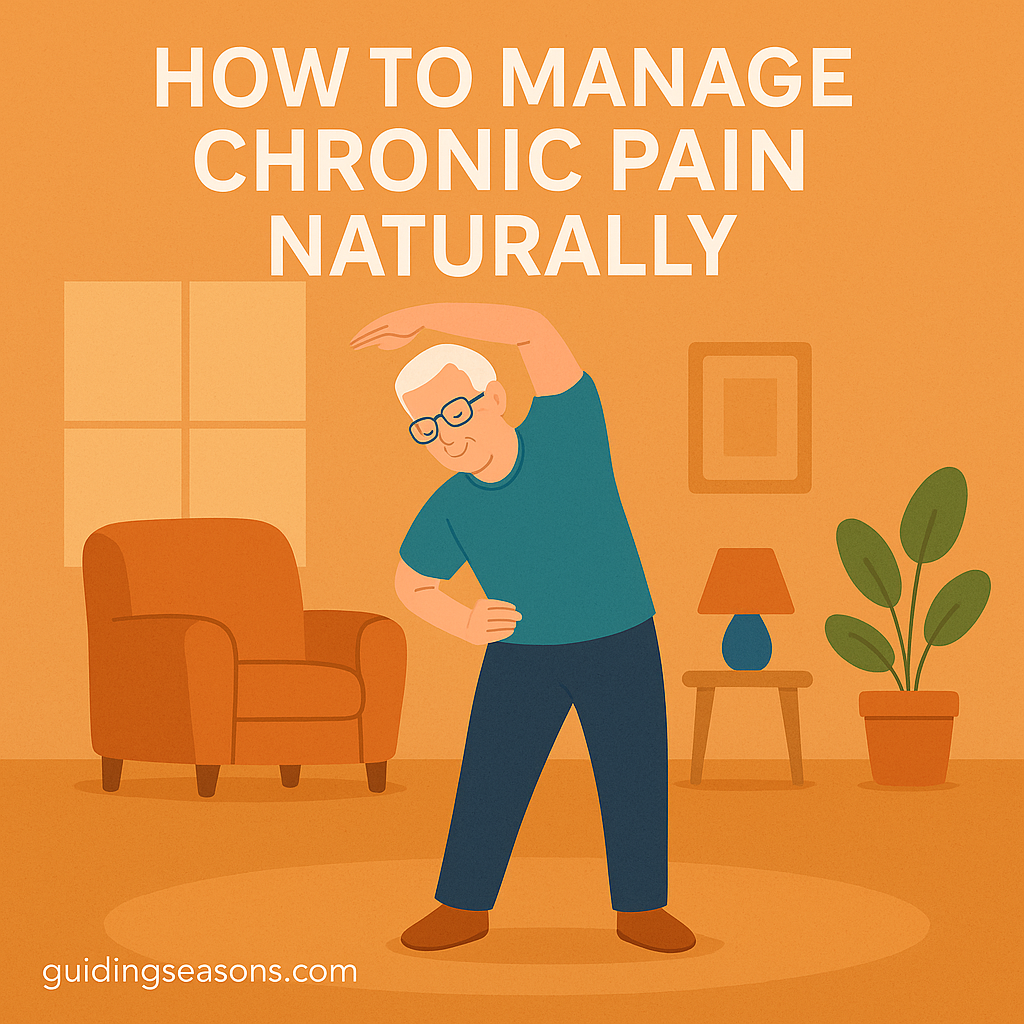
How to Manage Chronic Pain Naturally

Older man doing a gentle side stretch in a warm, cozy living room to help manage chronic pain naturally, with the title “How to Manage Chronic Pain Naturally” above.
An older man practices light stretching at home to relieve chronic pain, shown in a calm and comforting environment.

Living with chronic pain can affect nearly every part of daily life. It may make walking, sleeping, exercising, completing household tasks, or simply getting comfortable more difficult. Over time, persistent pain can also affect energy, mood, independence, and the activities you enjoy.

Although chronic pain sometimes requires medication or other medical treatment, medication is not the only tool available. A well-rounded pain-management plan may also include gentle physical activity, better sleep habits, relaxation techniques, physical therapy, heat or cold therapy, and certain complementary approaches.

The goal is not necessarily to eliminate every sensation of pain. For many people, a more realistic goal is to reduce discomfort, maintain mobility, improve function, and make everyday activities easier.

The National Center for Complementary and Integrative Health (NCCIH) reports that approaches including acupuncture, mindfulness meditation, massage, tai chi, and yoga may help with certain chronic pain conditions, although the strength of the evidence varies depending on both the treatment and the cause of the pain.

Here are practical ways to incorporate natural and non-drug strategies into a broader chronic pain management plan.

Continue reading “How to Manage Chronic Pain Naturally”