
Decluttering Tips for a Safer Home

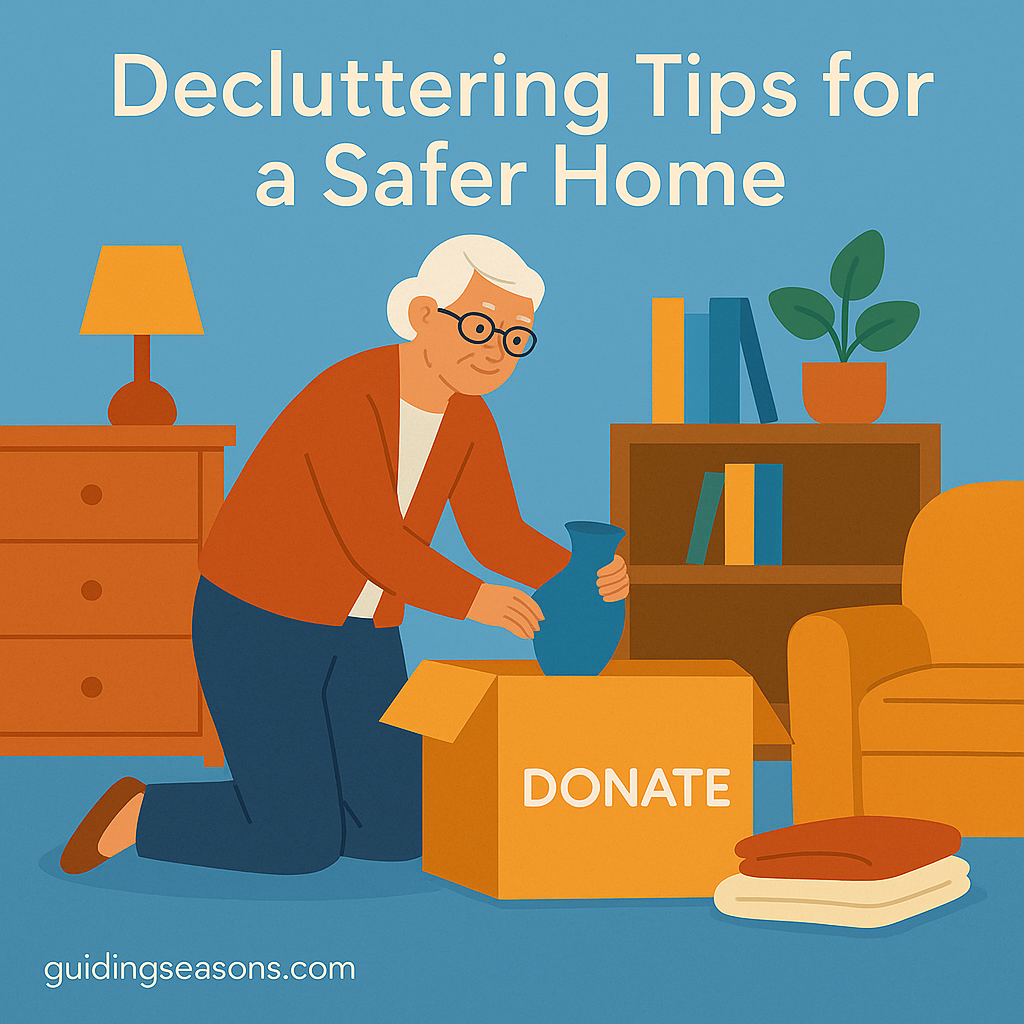
Older woman kneeling on the floor placing a vase into a donation box in her living room, illustrating decluttering tips for a safer home.
An older woman organizes belongings into a donation box, demonstrating simple decluttering steps for a safer home.

A clutter-free home is about much more than appearance. As we get older, having clear floors, easy-to-reach belongings, and well-organized living spaces can make everyday activities safer and more comfortable.

Items that once seemed harmless—a stack of magazines beside a chair, shoes near the doorway, an extension cord running across the floor, or a small table in a hallway—can gradually become obstacles. Clutter can make it harder to move around with confidence, especially for someone who uses a cane, walker, or other mobility aid.

Home hazards such as clutter and throw rugs are among the factors that can contribute to falls in older adults, according to the Centers for Disease Control and Prevention (CDC). The CDC recommends removing tripping hazards and keeping floors clear as part of making the home safer.

The goal, however, is not to create a perfectly empty house. Your home should still feel comfortable, familiar, and personal.

Instead, focus on removing obstacles, organizing the things you use, and making important areas easier to navigate.

Here are practical decluttering strategies for creating a safer and more enjoyable home.

Continue reading “Decluttering Tips for a Safer Home”
How to Create a Fall Prevention Plan

Older woman walking through her living room using a cane, surrounded by safety features such as grab bars and clear pathways, illustrating how to create a fall prevention plan.
An older woman moves safely through her home using supportive tools, representing key steps in creating an effective fall prevention plan.

Falls are one of the most common causes of injury among older adults, but many falls can be prevented with thoughtful planning, safer habits, and a few changes around the home.

According to the Centers for Disease Control and Prevention (CDC), more than 14 million adults age 65 and older—about 1 in 4—report falling each year. Falls are also the leading cause of injury among adults in this age group.

Those numbers can sound alarming, but they also highlight why prevention matters.

A fall prevention plan is not about limiting your independence or becoming afraid of normal activities. In fact, the opposite is true. A good plan can help you remain active, move around with greater confidence, and identify problems before they cause an injury.

The most effective approach looks at the whole picture: your health, medications, eyesight, strength, footwear, home environment, mobility needs, and emergency plan.

Here is how to create a practical fall prevention plan that fits your everyday life.

Continue reading “How to Create a Fall Prevention Plan”

Simple Home Modifications for Comfort and Safety

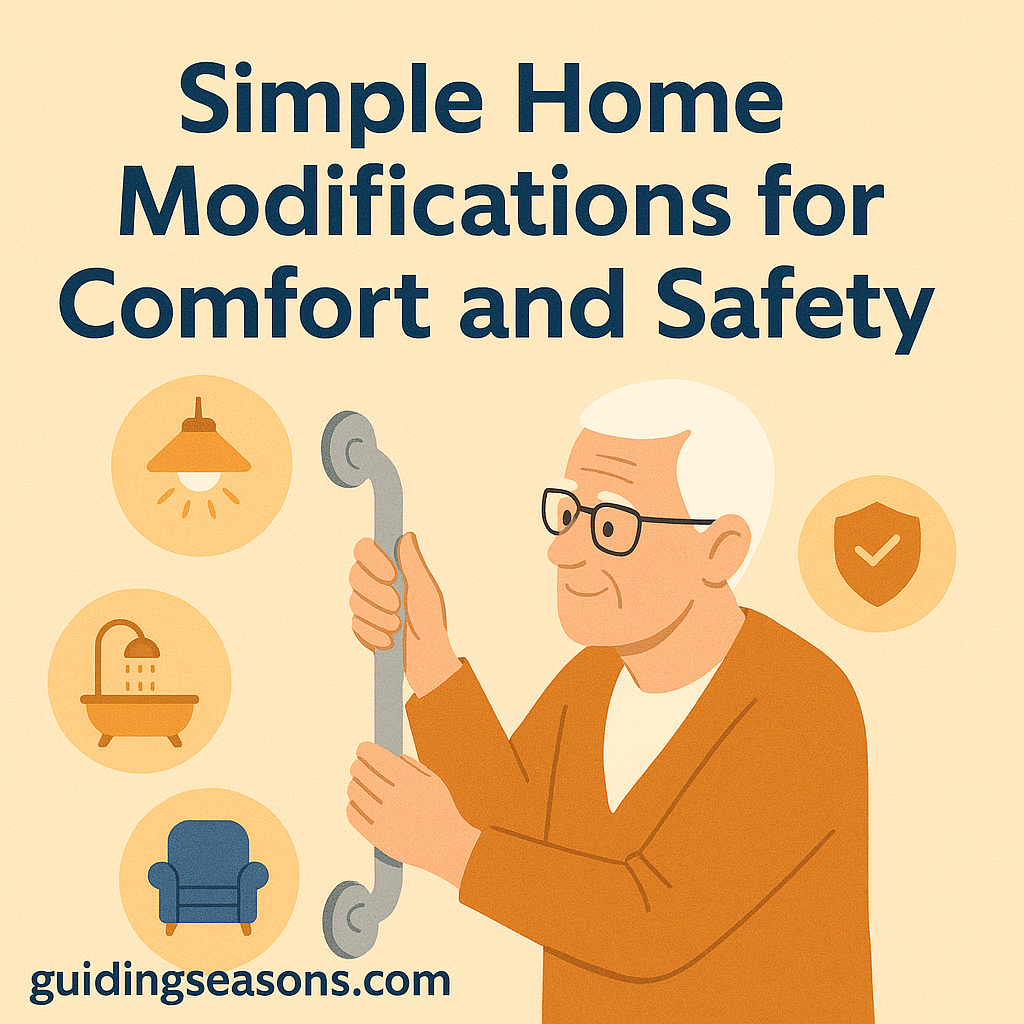
Illustration of an older man installing a home safety grab bar, surrounded by icons of lighting, a shower, a cushioned chair, and safety features, beneath the title “Simple Home Modifications for Comfort and Safety.”
A senior making simple home modifications that improve comfort and safety.

A comfortable and safe home becomes increasingly important as we age. Small changes can make daily life smoother, reduce the risk of falls, and support long-term independence. Many home modifications are simple, affordable, and easy to implement—yet they can make a meaningful difference in comfort, confidence, and peace of mind.

Whether you’re aging in place or helping a loved one prepare for the future, improving home safety can help ensure that your living space remains supportive for many years to come.

Continue reading “Simple Home Modifications for Comfort and Safety”

How to Make Your Home Safer as You Age

Illustration of an older woman using a cane and holding a safety grab bar, surrounded by icons representing home safety features beneath a title about making your home safer as you age.
A senior using helpful home safety features that support comfort and independence.

Your home should be a place where you feel comfortable, confident, and independent. But as you get older, the way you interact with your surroundings can gradually change.

A step that once seemed insignificant may become harder to navigate. Dim lighting may make it more difficult to see objects on the floor. Reaching into a high cabinet may require more effort than it used to. Even familiar furniture arrangements can become inconvenient if they leave narrow walking paths.

Making your home safer does not mean preparing for the worst or giving up your independence. In many cases, the opposite is true. A safer environment can make it easier to continue performing everyday activities on your own.

Fall prevention is particularly important. According to the Centers for Disease Control and Prevention (CDC), more than one in four adults age 65 and older reports falling each year. The CDC recommends practical measures such as removing tripping hazards, improving lighting, installing grab bars, and adding railings to make the home safer. CDC — Older Adult Fall Prevention

The best time to improve home safety is before a problem occurs.

Here are practical ways to make your home safer, easier to navigate, and more supportive as you age.

Continue reading “How to Make Your Home Safer as You Age”