Purpose is not something reserved for your working years. It can change, deepen, and take on entirely new forms throughout life.
For many older adults, retirement and other major life transitions create an unusual opportunity. After decades of responsibilities, schedules, careers, raising families, and caring for others, you may suddenly have more freedom to decide how you want to spend your time.
That freedom can be exciting, but it can also raise an important question: What gives my life meaning now?
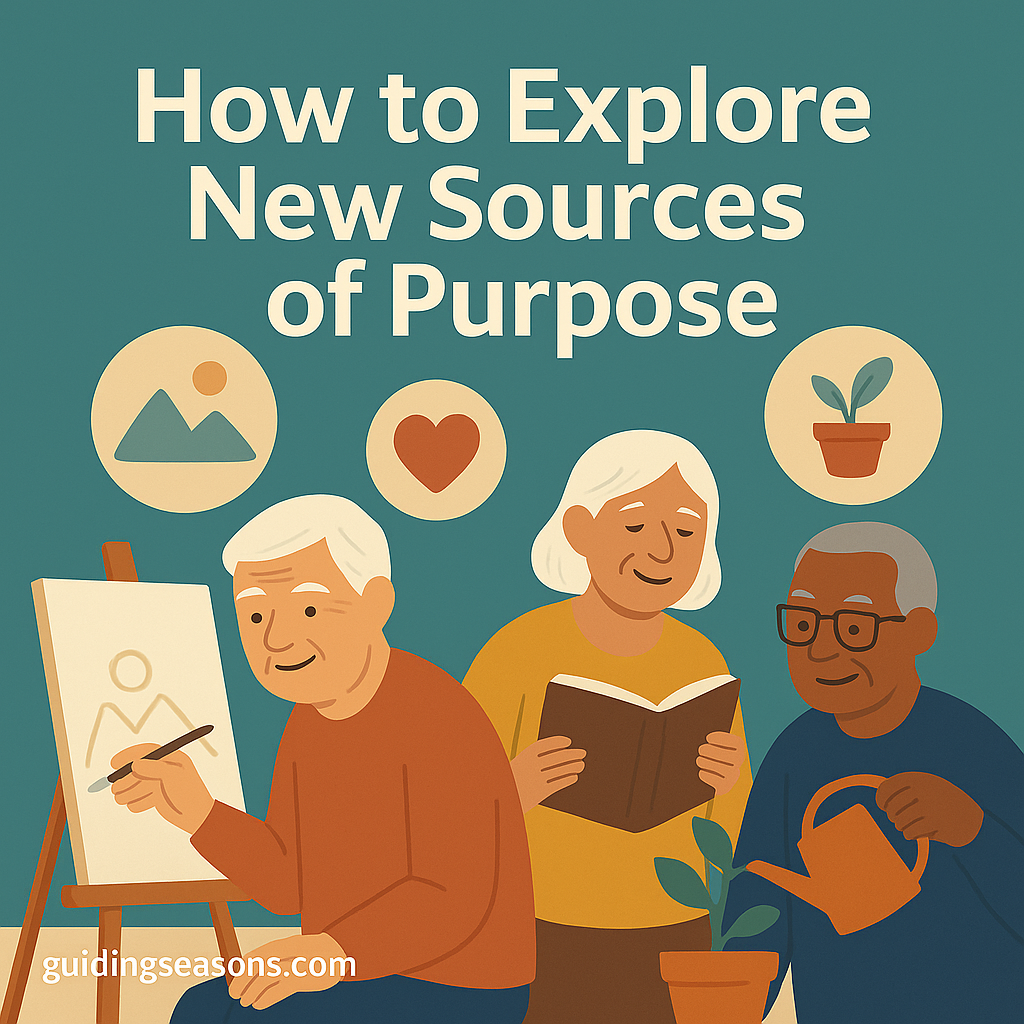
The answer does not have to involve a major accomplishment or a completely new identity. Purpose can come from relationships, hobbies, learning, volunteering, caring for others, creativity, faith, personal growth, or simply having something meaningful to look forward to.
Research also suggests that staying socially engaged matters as we age. The National Institute on Aging (NIA) notes that social activities, including visiting friends and neighbors and volunteering, have been associated with better cognitive health in older adults.
If your sense of purpose feels different than it once did, that is perfectly reasonable. Instead of trying to recreate an earlier chapter of your life, you can begin exploring what feels meaningful today.
1. Reflect on What Brings You Joy
A good place to begin is with a simple question:
What makes me look forward to the day?
Purpose and enjoyment are not exactly the same thing, but they often overlap. Activities that consistently leave you feeling interested, useful, connected, or energized can provide clues about what matters most to you.
Ask yourself:
- What activities make me lose track of time?
- When do I feel most useful?
- Who do I enjoy spending time with?
- What subjects am I naturally curious about?
- What did I enjoy before life became so busy?
- What would I like to do more often?
You do not need immediate answers. Spend a few days noticing the moments that make you feel particularly content or engaged.
Perhaps you enjoy explaining things to your grandchildren. Maybe you love caring for plants, fixing things around the house, cooking for other people, reading history, or talking with neighbors.
Those seemingly ordinary interests can become meaningful parts of your next chapter.
2. Revisit Hobbies You Once Loved
Sometimes a new source of purpose is actually an old one waiting to be rediscovered.
Think about interests you enjoyed earlier in life but gradually stopped pursuing because work, family responsibilities, or other obligations took priority.
You might return to:
- Gardening
- Cooking or baking
- Fishing
- Sewing or quilting
- Carpentry or woodworking
- Music
- Reading
- Writing
- Photography
- Walking or hiking
- Collecting
- Painting or drawing
Don’t worry about whether you’re still good at something.
The goal isn’t necessarily achievement. It’s engagement.
Someone who enjoyed photography 30 years ago, for example, might start taking pictures again with a smartphone. That could eventually lead to photographing local wildlife, creating family photo books, joining a photography group, or documenting changes in the neighborhood.
One interest can gradually open the door to several others.
3. Give Yourself Permission to Try Something Completely New
Your later years don’t have to revolve around things you’ve already done.
They can also be a time for experimentation.
Consider trying:
- Painting or pottery
- Photography
- Computer or technology classes
- A new language
- Dancing
- Birdwatching
- Genealogy
- Gardening
- Creative writing
- Local history
- Cooking classes
- Musical instruments
- Community workshops
You don’t need to commit for years. Think of new activities as experiments.
Give something three or four sessions before deciding whether it’s right for you.
For example, imagine a 68-year-old retiree who decides to try gardening despite having little previous experience. The first goal might simply be growing three tomato plants in containers.
That small experiment could eventually lead to joining a community garden, sharing vegetables with neighbors, teaching grandchildren how plants grow, or volunteering with a local gardening program.
The original goal was only three plants. The larger sense of purpose developed naturally from it.
4. Volunteer and Share What You Know
One of the most direct ways to develop a stronger sense of purpose is to help someone else.
After decades of life experience, you probably know more than you realize.
Your knowledge may come from a career, but it could just as easily come from raising children, maintaining a home, managing finances, cooking, repairing things, caring for relatives, participating in a community, or navigating difficult periods of life.
Consider volunteering through:
- Food banks
- Libraries
- Schools
- Animal shelters
- Community gardens
- Museums
- Hospitals
- Faith communities
- Neighborhood organizations
- Mentoring programs
- Nonprofit organizations
You don’t necessarily need a formal volunteer position either. Helping a neighbor, tutoring a grandchild, driving someone to an appointment, or teaching another person a skill can all provide meaning.
There is encouraging evidence behind this idea as well. In discussing the U.S. Strategic Framework for a National Plan on Aging, the NIA reported AmeriCorps Seniors findings showing that after a year of purposeful volunteer engagement, 84% of volunteers reported improved or stable health and 88% reported decreased feelings of isolation.
Helping other people can remind you that your experience still has considerable value.
5. Strengthen the Relationships That Matter
Purpose doesn’t always have to come from accomplishing something.
Sometimes it comes from belonging.
Relationships with family, friends, neighbors, and community members can provide structure, responsibility, companionship, and meaning.
You might:
- Have a weekly lunch with a friend
- Call a sibling every Sunday
- Schedule regular outings with grandchildren
- Join a walking group
- Attend community gatherings
- Introduce yourself to neighbors
- Join a book club
- Reconnect with an old friend
These may sound like simple social activities, but they can become meaningful anchors in your week.
The Centers for Disease Control and Prevention (CDC) emphasizes that social connection contributes to mental and physical health and that people with stronger social bonds are more likely to live longer, healthier lives.
Instead of waiting for social opportunities to happen, consider intentionally putting a few on your calendar.
6. Explore Spirituality, Reflection, or Mindfulness
For some people, purpose becomes more inward with age.
You may become increasingly interested in questions about gratitude, faith, family, legacy, values, or what constitutes a meaningful life.
That exploration can take many forms.
You might try:
- Prayer
- Meditation
- Gratitude journaling
- Mindfulness
- Spending quiet time in nature
- Attending religious services
- Reading spiritual or philosophical books
- Participating in a faith community
- Reflecting on important life experiences
You don’t have to follow any particular philosophy.
Even setting aside 10 quiet minutes each morning to reflect on what you’re grateful for and what you’d like to accomplish that day can create a stronger sense of direction.
7. Set Small Goals That Give Your Days Direction
Purpose becomes easier to experience when it is connected to action.
Instead of asking yourself to discover one enormous “purpose in life,” choose small goals that make the coming week or month feel meaningful.
For example:
- Walk three mornings each week
- Read one book this month
- Call one friend every Friday
- Learn one new recipe each week
- Spend 30 minutes gardening twice a week
- Take one local day trip each month
- Practice an instrument for 15 minutes a day
- Volunteer twice a month
These goals don’t sound dramatic, and that’s exactly the point.
Purpose doesn’t have to feel dramatic.
A collection of small responsibilities, relationships, interests, and goals can create a deeply satisfying life.
8. Keep Learning
Learning is not something that ends when formal education or a career ends.
In retirement, learning can actually become more enjoyable because you’re free to study subjects simply because they interest you.
You might explore:
- History
- Technology
- Art
- Music
- Personal finance
- Astronomy
- Languages
- Cooking
- Gardening
- Local history
- Photography
- Genealogy
You could take an online course, attend a library workshop, watch educational programs, read books, or participate in classes offered by a community center or local college.
You might also learn something practical, such as how to organize digital photographs, use video calling, build a simple website, or research your family history.
The objective doesn’t have to be earning a certificate.
Learning itself can provide momentum.
9. Create Something That Outlasts the Moment
Another powerful source of purpose is creating something for other people.
That might mean writing down family stories, organizing photographs, recording recipes, making handmade gifts, creating artwork, or documenting your family’s history.
Consider creating:
- A family recipe book
- A collection of childhood stories
- A photo album with written captions
- A family tree
- Recorded conversations about your life
- Letters for children or grandchildren
- A memoir
- A garden
- Handmade furniture or crafts
These projects combine creativity with legacy.
They can also encourage conversations between generations.
A grandchild may know where you grew up, for example, but may never have heard what your first job was like, how you met your spouse, what your neighborhood looked like when you were young, or what lessons you learned during difficult times.
Your memories are part of your family’s history.
Preserving them can become an especially meaningful project.
10. Adjust Your Activities to Your Current Abilities
Purpose should support your life rather than become another source of pressure.
Physical abilities, finances, transportation, energy levels, and responsibilities can change over time. Meaningful activities can change with them.
If hiking becomes difficult, perhaps nature photography from accessible trails becomes enjoyable.
If traveling is no longer practical, exploring nearby museums or historical sites may provide a similar sense of discovery.
If volunteering for an entire day feels exhausting, perhaps two hours twice a month works better.
The activity can change while the underlying purpose remains.
What matters is finding a version that works for your life today.
11. Accept That Your Purpose May Change
One of the most important things to understand about purpose is that it isn’t necessarily permanent.
At 45, your purpose may have centered around raising children and building a career.
At 65, it might involve travel, grandchildren, volunteering, or creative projects.
At 80, it might focus more heavily on family relationships, sharing wisdom, maintaining independence, or enjoying everyday experiences.
None of these purposes is more legitimate than another.
Life changes, and meaning changes with it.
Allow yourself to release roles that no longer fit while remaining curious about what might replace them.
12. Build a “Purpose Portfolio”
Rather than searching for one grand calling, consider building what you might think of as a purpose portfolio.
Choose several areas that make life meaningful.
For example:
Connection: Have lunch with family every Sunday.
Growth: Take an online history class.
Health: Walk for 20 minutes three times a week.
Contribution: Volunteer at the library twice a month.
Creativity: Work on a family photo book.
Now your sense of purpose doesn’t depend on one activity.
If circumstances change in one area, the others remain.
This approach can also make retirement feel more balanced. There is something to learn, someone to see, something to contribute, and something to look forward to.
Celebrate Small Steps
It’s easy to overlook progress when you’re expecting a major transformation.
Instead, recognize smaller victories.
Perhaps you attended your first community class.
Maybe you finally called an old friend.
Perhaps you walked around the neighborhood three times this week or spent an afternoon teaching your grandchild how to cook a favorite family recipe.
Those moments matter.
Purpose often develops quietly through repeated experiences rather than appearing as one dramatic realization.
Pay attention to what leaves you thinking, I’d like to do that again.
That feeling can point you in the right direction.
Final Thoughts
Exploring new sources of purpose isn’t about filling every hour of retirement or constantly trying to be productive.
It’s about creating reasons to remain curious, connected, engaged, and interested in what comes next.
Your purpose might come from volunteering. It might come from grandchildren, gardening, learning, faith, friendship, creativity, travel, caring for animals, mentoring someone younger, or finally pursuing an interest you’ve postponed for decades.
More likely, it will come from several of these things at once.
Start small.
Choose one person you’d like to reconnect with, one activity you’d like to try, or one project you’ve been thinking about. Give it some time and notice how you feel.
Then follow the things that create connection, curiosity, usefulness, and joy.
Purpose doesn’t have to arrive as one great revelation. More often, it grows from the choices you make each day and the people, activities, and experiences you decide are worth your time.
There are still things to learn, relationships to deepen, experiences to enjoy, and contributions to make.
Your next source of purpose may begin with something as simple as deciding what you’d like to try tomorrow.