How to Explore New Sources of Purpose

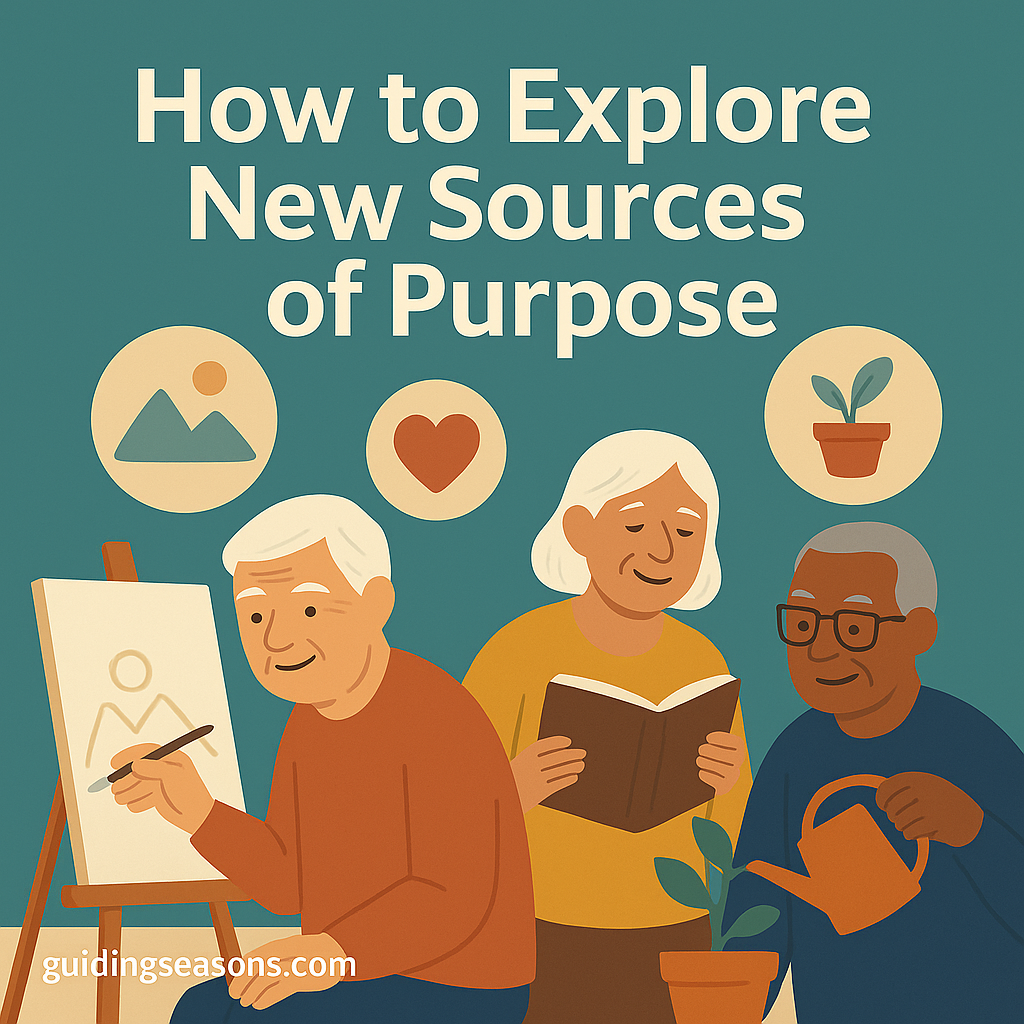
Three older adults enjoying meaningful activities—painting, reading, and gardening—symbolizing new sources of purpose.
Seniors exploring new sources of purpose through creative and fulfilling activities.

Purpose is not something reserved for your working years. It can change, deepen, and take on entirely new forms throughout life.

For many older adults, retirement and other major life transitions create an unusual opportunity. After decades of responsibilities, schedules, careers, raising families, and caring for others, you may suddenly have more freedom to decide how you want to spend your time.

That freedom can be exciting, but it can also raise an important question: What gives my life meaning now?

The answer does not have to involve a major accomplishment or a completely new identity. Purpose can come from relationships, hobbies, learning, volunteering, caring for others, creativity, faith, personal growth, or simply having something meaningful to look forward to.

Research also suggests that staying socially engaged matters as we age. The National Institute on Aging (NIA) notes that social activities, including visiting friends and neighbors and volunteering, have been associated with better cognitive health in older adults.

If your sense of purpose feels different than it once did, that is perfectly reasonable. Instead of trying to recreate an earlier chapter of your life, you can begin exploring what feels meaningful today.

Continue reading “How to Explore New Sources of Purpose”
How to Improve Home Accessibility

Group of older adults using mobility aids such as a wheelchair and canes, demonstrating home accessibility improvements.
Older adults using mobility aids to illustrate practical ways to improve home accessibility.

A comfortable home should make everyday life easier, not create unnecessary obstacles. As we get older, however, features that once seemed harmless—such as a loose rug, a dim hallway, a low toilet, or a difficult-to-turn doorknob—can become frustrating or even unsafe.

Improving home accessibility means adapting your living space so it remains comfortable, practical, and easy to navigate as your needs change. Some improvements cost very little, while others may involve larger renovations. You do not need to make every change at once.

In fact, starting with the areas you use most often can make a noticeable difference without completely remodeling your home.

According to the Centers for Disease Control and Prevention (CDC), more than one in four adults age 65 and older reports falling each year. Falls can have serious consequences, but many risk factors around the home can be addressed. CDC — Older Adult Falls

Here are practical ways to make your home safer, easier to use, and more accessible.

Continue reading “How to Improve Home Accessibility”

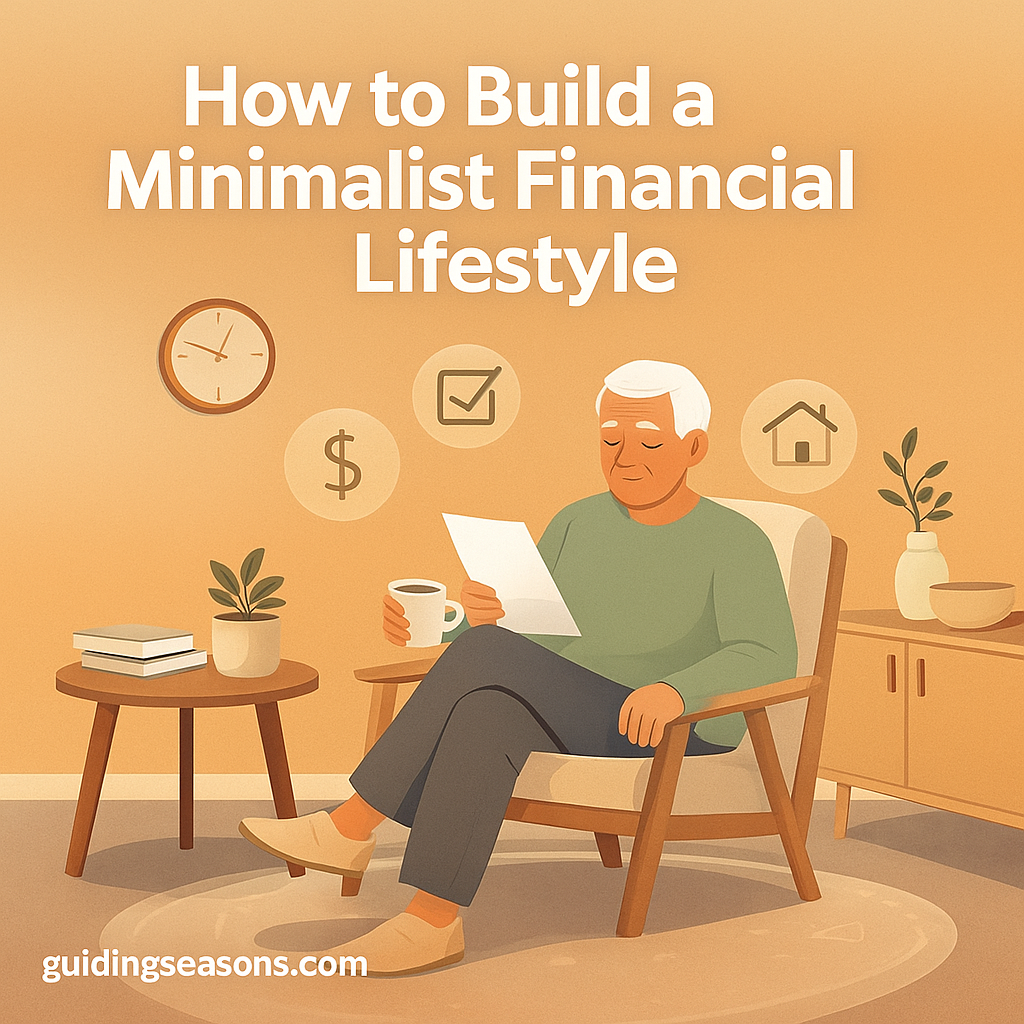
How to Build a Minimalist Financial Lifestyle

Older man sitting peacefully on the floor holding a book, surrounded by minimalist financial icons like a dollar sign, piggy bank, shopping bag, and heart.
Older man enjoying a calm minimalist lifestyle with simple financial icons around him.

A minimalist financial lifestyle is not about denying yourself comfort, avoiding everything enjoyable, or trying to spend as little money as possible. Instead, it is about simplifying your financial life so your money supports the things that genuinely matter to you.

For retirees and older adults, financial minimalism can be particularly valuable. Retirement often changes the way money flows through a household. A paycheck may be replaced by Social Security, pensions, retirement account withdrawals, investment income, or a combination of several sources. At the same time, priorities may shift toward healthcare, family, travel, hobbies, housing, and maintaining financial security.

Having fewer unnecessary expenses, accounts, subscriptions, possessions, and financial obligations can make managing all of this easier.

The Consumer Financial Protection Bureau (CFPB) notes that retirement can last 20 years or longer, making ongoing financial decision-making an important part of retirement planning. Simplifying those decisions can help make your finances easier to understand and maintain.

Here is how to begin building a minimalist financial lifestyle without sacrificing the things you enjoy.

Continue reading “How to Build a Minimalist Financial Lifestyle”

How to Build a Travel Bucket List

Older woman writing a travel bucket list in a notebook with a map, globe, and travel icons around her.
Older woman creating a travel bucket list with a map and globe for inspiration.

A travel bucket list is more than a collection of famous places you hope to visit someday.

At its best, it is a personal roadmap for experiences that matter to you.

Your list might include seeing the Grand Canyon at sunrise, taking a scenic train ride through the mountains, spending a quiet week near the ocean, visiting the town where your grandparents grew up, exploring a famous museum, or taking your grandchildren somewhere special.

There is no correct travel bucket list.

Some people dream about international adventures. Others would rather explore national parks, small towns, coastal roads, gardens, historical sites, or destinations within a few hours of home.

The important thing is that the list reflects your interests, abilities, budget, and priorities rather than someone else’s idea of what travel should look like.

And a good bucket list should eventually lead to action.

Here is how to create one that inspires you while still helping you turn those ideas into real trips.

Continue reading “How to Build a Travel Bucket List”

How to Use Voice Assistants at Home

Older man sitting in an armchair and speaking to a smart speaker, demonstrating how to use voice assistants at home.
Older man comfortably using a smart speaker to perform tasks with a voice assistant at home.

Voice assistants can make everyday tasks around the home simpler, faster, and more accessible. With a short spoken command, you can check the weather, set a reminder, play music, turn on a light, make a phone call, or ask a question without having to navigate complicated menus.

For older adults in particular, voice-controlled technology can be useful because it reduces the need to type on small screens, remember which buttons to press, or walk across a room to operate certain devices. Once properly set up, a voice assistant can become a convenient part of an everyday routine.

Voice assistants are commonly available through Amazon Alexa devices, Apple devices using Siri, and Google devices and services. You don’t need to learn every feature at once. Starting with two or three useful commands is often the easiest way to become comfortable with the technology.

Here is a practical guide to using a voice assistant confidently and safely at home.

Continue reading “How to Use Voice Assistants at Home”

How to Build Trust in Family Relationships

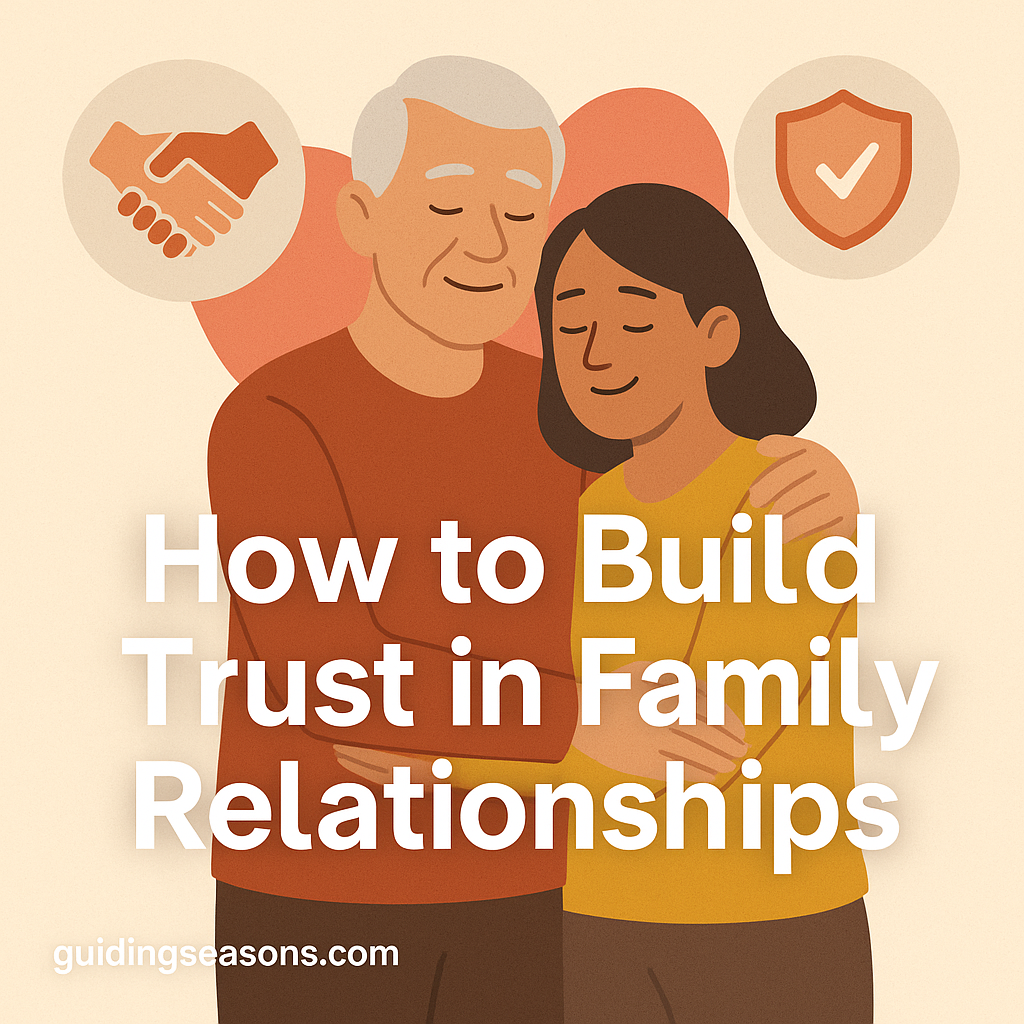
Older man hugging a younger family member with trust-related icons like a handshake and shield in the background.
Older man embracing a younger family member with symbols representing trust and safety.

Trust is one of the foundations of a strong family relationship. It allows people to speak honestly, ask for help, share concerns, and feel confident that the people closest to them will treat them with respect.

But trust is rarely created through one big gesture.

It develops through hundreds of smaller experiences over time: keeping a promise, listening without judgment, respecting someone’s privacy, apologizing after making a mistake, or simply showing up when you said you would.

Later in life, trust within families can become especially important. Relationships with adult children may change as everyone becomes more independent. Grandchildren grow older and develop their own opinions and lives. Siblings may find themselves making decisions about aging parents, inheritances, caregiving, or family property. Retirement and health changes can also alter long-established family roles.

Some families become closer during these transitions. Others discover old misunderstandings or unresolved tensions.

Fortunately, trust is not something that can only be established when a relationship is new. It can continue growing — and in many situations, it can be rebuilt — throughout life.

Continue reading “How to Build Trust in Family Relationships”

How to Start Baking as a Relaxing Hobby

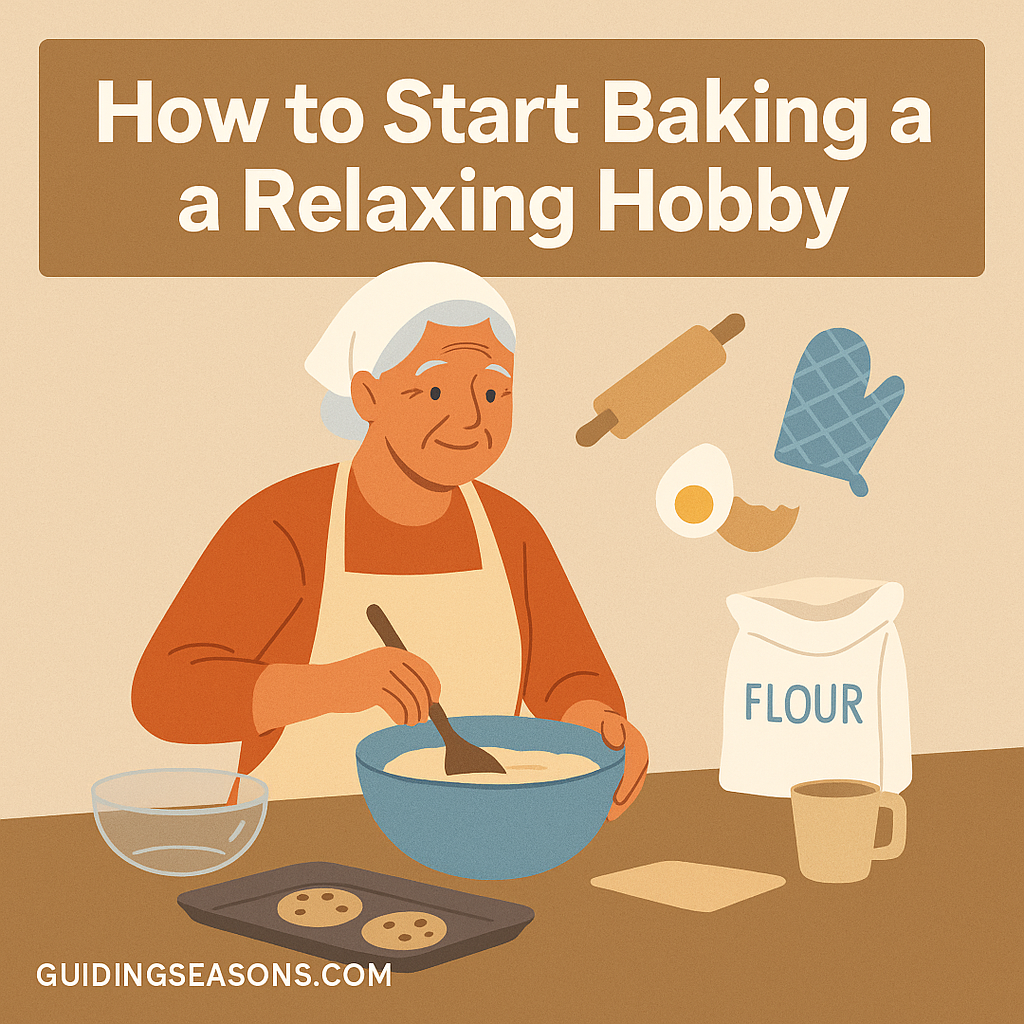
Older woman happily mixing batter in a bowl with baking ingredients and tools around her.
Older woman enjoying baking as a relaxing hobby with simple ingredients on the counter.

Baking can be one of the most relaxing and rewarding hobbies to enjoy at any age. There is something satisfying about taking a handful of ordinary ingredients—flour, butter, eggs, sugar, fruit, or spices—and turning them into warm bread, cookies, muffins, or a homemade cake.

You don’t need professional equipment or years of kitchen experience to begin. In fact, some of the best recipes for new bakers require only a mixing bowl, a few measuring tools, a pan, and an oven.

Baking can also provide a welcome change of pace from a busy or repetitive day. Instead of staring at a screen or rushing through another task, you can slow down, measure ingredients, mix a batter, enjoy familiar aromas, and eventually sit down with something you created yourself.

For seniors looking for a hobby that can be enjoyed comfortably at home, baking is especially flexible. You can bake alone during a quiet afternoon, prepare something with grandchildren, make treats for neighbors, or gradually challenge yourself with new recipes and techniques.

The key is not to turn baking into another source of pressure. Start simply, work at your own pace, and allow yourself to enjoy both the process and the results.

Here’s how to get started.

Continue reading “How to Start Baking as a Relaxing Hobby”

How to Protect Your Joints From Wear and Tear

Older woman holding her knee with joint pain illustrations around her, symbolizing ways to protect joints from wear and tear.
Older woman experiencing knee discomfort with icons representing joint protection tips.

Your joints help you do nearly everything that involves movement. Walking, standing, climbing stairs, getting dressed, cooking, gardening, driving, and even reaching for something on a shelf all depend on healthy joints working together with your muscles and bones.

As you age, it is common to notice changes such as stiffness, reduced flexibility, or occasional discomfort. Conditions such as osteoarthritis also become more common over time. But aging does not automatically mean that your joints must become painful or severely limited.

In fact, many of the same habits that support overall health can also support joint function: staying active, maintaining muscle strength, managing body weight, using good movement techniques, and addressing persistent symptoms early.

The National Institute on Aging notes that safe exercise can reduce joint pain and stiffness while improving flexibility, strength, and endurance in people with osteoarthritis. Low-impact activities such as walking, cycling, swimming, and tai chi can be especially useful.

The goal is not to avoid using your joints. It is to use them in ways that help maintain strength and mobility without repeatedly exposing them to unnecessary stress or injury.

Continue reading “How to Protect Your Joints From Wear and Tear”

How to Balance Risk and Safety in Retirement

Older man sitting at a table holding a balanced scale, with warning and shield icons representing risk and safety in retirement.
Older man balancing risk and safety in retirement using symbolic scale and icons.

Retirement changes the way many people think about money.

During your working years, you may have focused primarily on building your savings. Once you retire, the challenge becomes different: you need to protect what you’ve accumulated while continuing to generate enough growth and income to support yourself for potentially decades.

That creates an important question:

How much of your retirement savings should be protected, and how much should remain invested for growth?

There isn’t one answer that works for everyone.

Keeping too much money in volatile investments can expose you to losses at a time when you may be withdrawing money from your portfolio. On the other hand, moving everything into cash or very conservative investments creates another risk: your purchasing power may gradually decline because of inflation.

The goal isn’t to eliminate risk completely. It’s to understand the different risks you face and create a balance that fits your income, expenses, goals, time horizon, and comfort level.

Here are practical ways to think about risk and safety throughout retirement.

Continue reading “How to Balance Risk and Safety in Retirement”

How to Practice Self-Compassion Daily

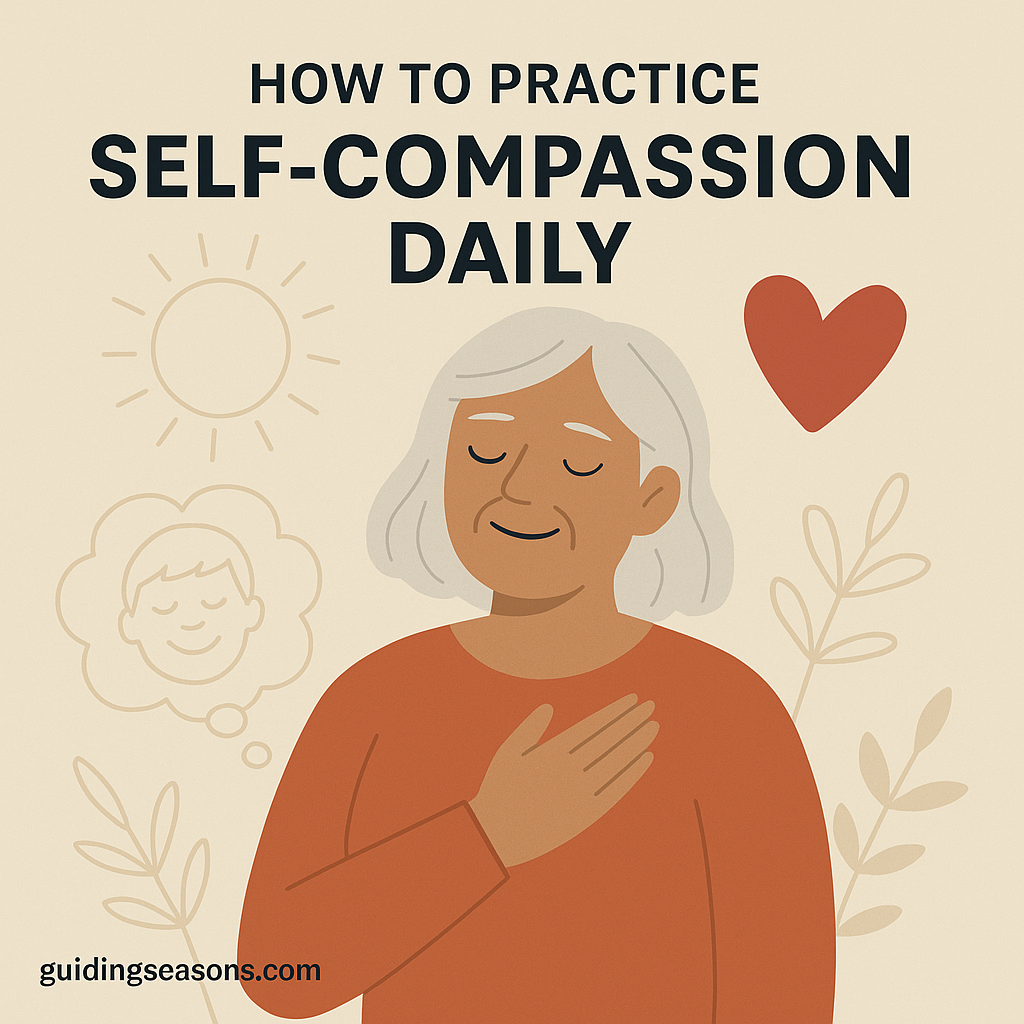
Older woman with her hand over her heart, surrounded by calm symbols like a heart and sun, practicing daily self-compassion.
Older woman practicing daily self-compassion with calming symbolic illustrations around her.

Most of us understand how to show compassion to another person.

When a friend makes a mistake, we usually don’t tell them they’re a failure. When someone we love is exhausted, we don’t criticize them for needing rest. When a family member is going through a difficult transition, we often remind them to give themselves time.

Yet many people struggle to extend that same understanding to themselves.

You might forget an appointment and immediately think, “What’s wrong with me?”

You may need more time to complete something and tell yourself, “I should be faster.”

Or perhaps retirement, changes in health, family responsibilities, financial concerns, or simply getting older have created a life that looks different from what you expected.

Self-compassion offers another way to respond.

It means recognizing that you’re having a difficult moment and treating yourself with the same patience and basic kindness you would offer someone else.

That doesn’t mean ignoring mistakes, avoiding responsibility, or pretending that everything is fine. In fact, self-compassion can make it easier to acknowledge a problem because you don’t have to attack yourself in the process.

Research increasingly supports this distinction. A 2025 systematic review indexed by the National Library of Medicine examined 113 studies involving self-compassion and psychological outcomes. It found that repetitive negative thinking, including worry and rumination, was an important process connecting self-compassion with psychological health, while mindfulness also appeared to play a role. The researchers cautioned that stronger studies are still needed to establish cause and effect.

Self-compassion doesn’t need to become another complicated self-improvement project.

It can begin with how you respond to yourself during the next difficult five minutes.

Continue reading “How to Practice Self-Compassion Daily”