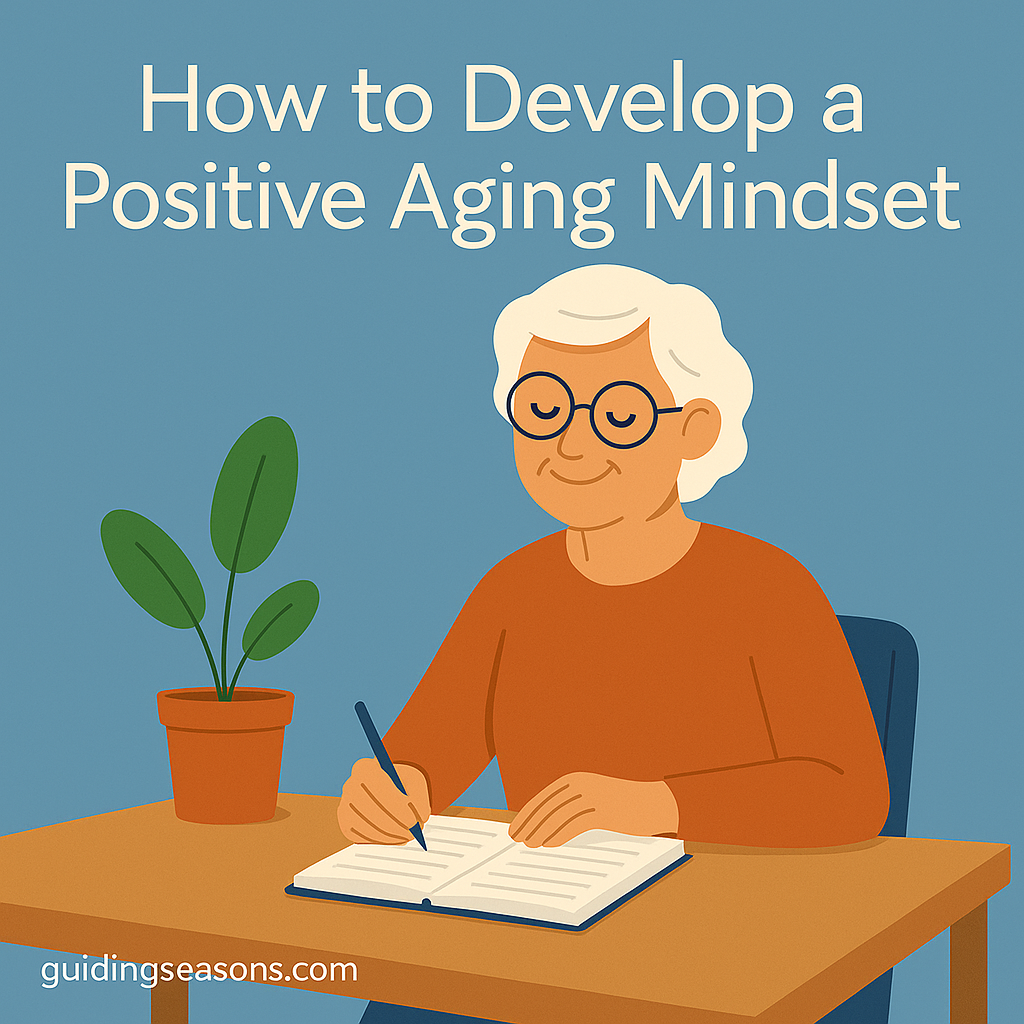
How to Develop a Positive Aging Mindset

Older woman smiling peacefully while journaling at a table, practicing gratitude, with a potted plant beside her and the title “How to Develop a Positive Aging Mindset” displayed above.
An older woman journals peacefully to practice gratitude, illustrating how developing a positive aging mindset begins with simple daily habits.

Aging is a natural part of life, but the way we think about getting older can have a powerful influence on how we experience it. For some people, aging brings concerns about health, independence, appearance, finances, or changing roles. For others, it creates opportunities for greater freedom, stronger relationships, new interests, and a clearer understanding of what matters most.

Developing a positive aging mindset does not mean pretending that every part of getting older is easy. Physical limitations, loss, health concerns, and major life transitions can be very real. A healthier mindset means recognizing those challenges without allowing them to define your entire experience of aging.

It also means questioning the idea that getting older automatically equals decline.

The World Health Organization (WHO) notes that ageism—including stereotypes, prejudice, and discrimination based on age—can even become self-directed when people internalize negative beliefs about what they should or should not be able to do as they grow older. WHO reports that ageism is associated with poorer physical and mental health, reduced quality of life, and greater social isolation.

Changing how you think about aging, therefore, is more than simply “thinking positive.” It can be part of creating a healthier, more engaged, and more fulfilling life.

Here are practical ways to develop a more positive and empowered mindset about aging.

Continue reading “How to Develop a Positive Aging Mindset”
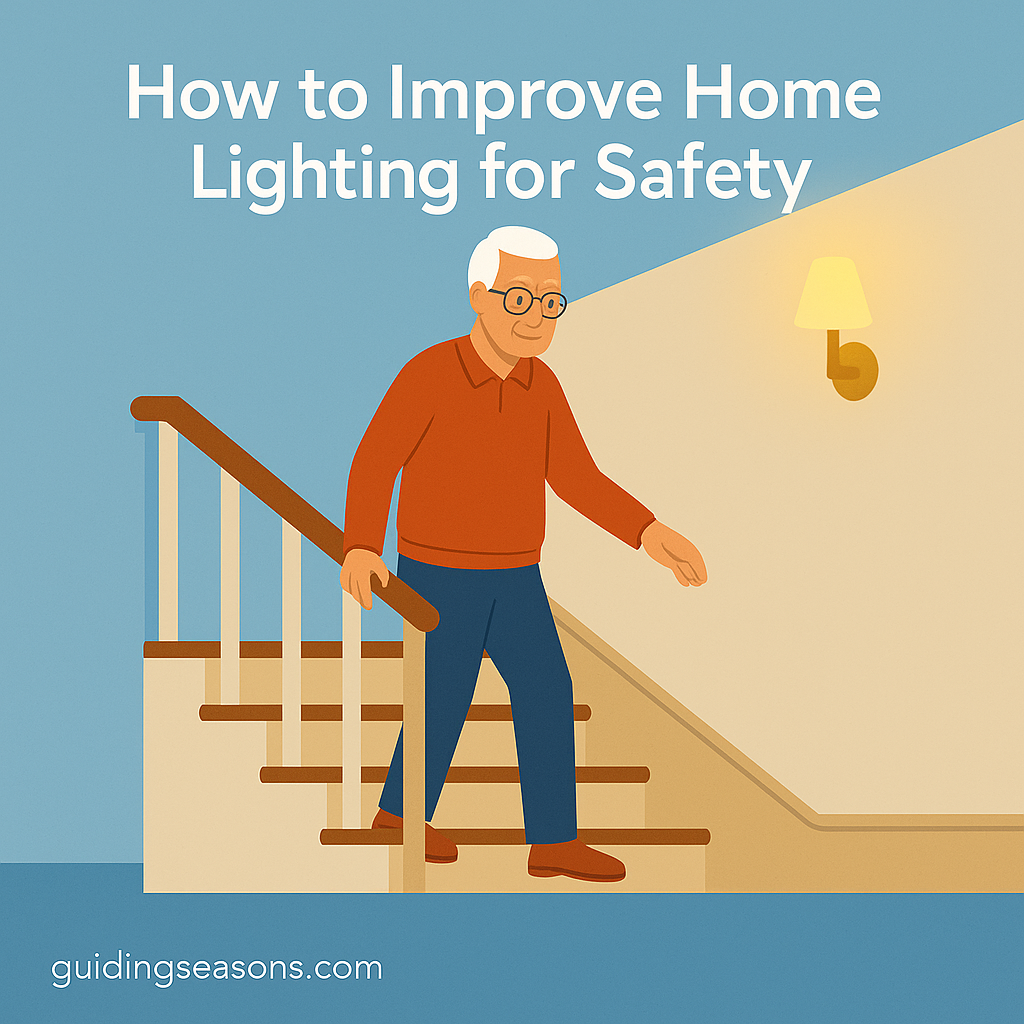
How to Improve Home Lighting for Safety

Older man walking safely down a well-lit staircase while holding the handrail, with a wall sconce illuminating the area and the title “How to Improve Home Lighting for Safety” displayed above.
An older man descends a brightly lit staircase, demonstrating how proper home lighting improves safety and reduces fall risks.

Good lighting does much more than make a home look inviting. It can help you see obstacles, judge steps and changes in floor level, complete everyday tasks more comfortably, and move through your home with greater confidence.

Lighting becomes especially important as we get older. Changes in eyesight can make it harder to adjust between bright and dark spaces, notice objects with low contrast, or see clearly in dim rooms. A hallway that once seemed bright enough may gradually become harder to navigate, particularly at night.

That matters because poor visibility can contribute to falls and other household accidents. The Centers for Disease Control and Prevention (CDC) specifically recommends making homes brighter with additional lighting or brighter bulbs as part of older-adult fall prevention. It also recommends good lighting in rooms and hallways, along with easily accessible switches or motion-sensor lights.

Fortunately, improving home lighting does not require replacing every fixture or undertaking a major renovation.

Small changes—such as adding a bedside lamp, replacing a dim bulb, installing motion-activated nightlights, or improving stairway illumination—can make everyday movement much easier.

Here is how to create a brighter, safer, and more comfortable home.

Continue reading “How to Improve Home Lighting for Safety”

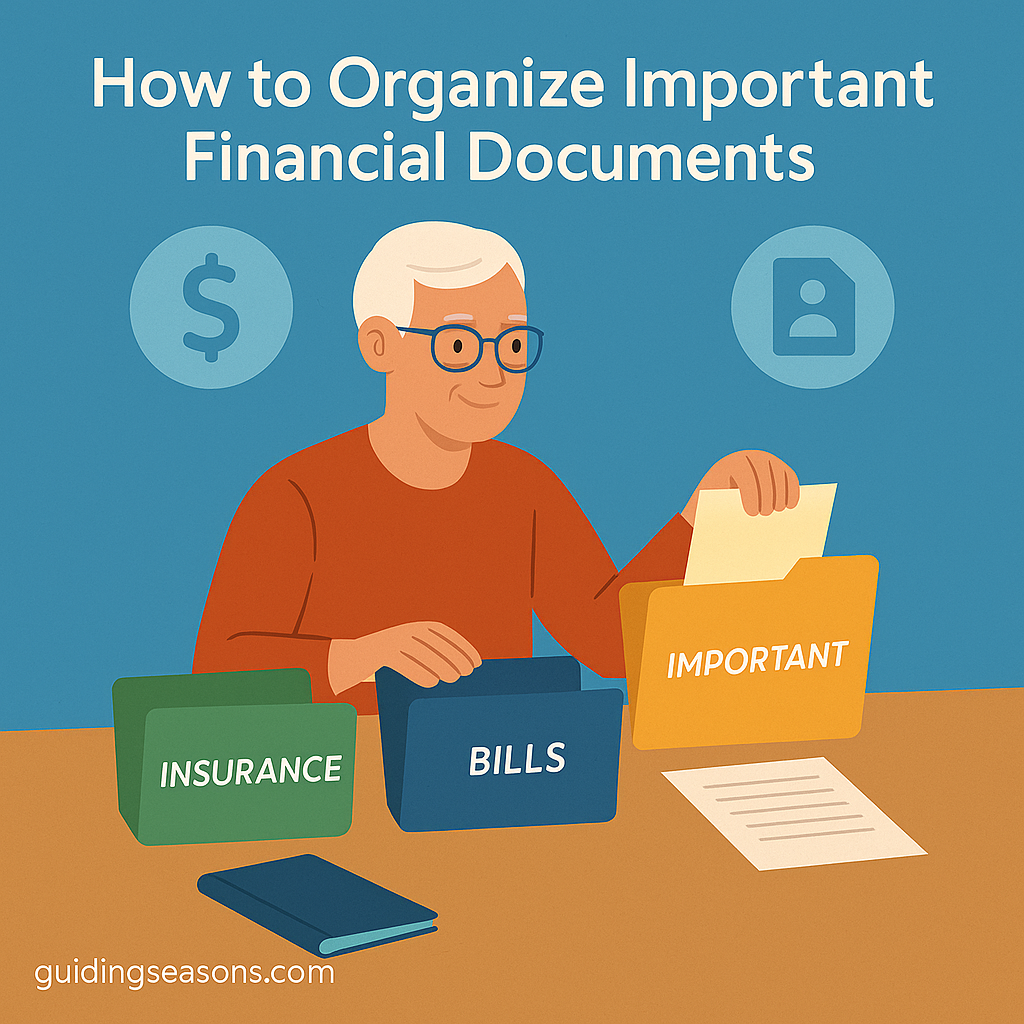
How to Organize Important Financial Documents

Older woman organizing financial papers into labeled folders for bills, insurance, and important documents, with the title “How to Organize Important Financial Documents” above
An older woman sorts bills, insurance papers, and important documents, illustrating simple steps for organizing essential financial records.

Keeping your financial documents organized is one of the simplest ways to protect your finances and make life easier for yourself and your loved ones. Bank records, insurance policies, tax documents, retirement statements, property records, and legal paperwork can quickly accumulate over the years. Without a system, finding one important document when you need it can become surprisingly difficult.

Good organization becomes especially important as you approach or enter retirement. You may have Social Security records, Medicare and insurance information, retirement accounts, pensions, investments, property documents, and estate planning paperwork that someone may eventually need to locate.

Fortunately, you do not need an elaborate filing system. A few clearly labeled folders, secure storage, digital backups, and a simple master list can make your financial life much easier to manage.

Here is a practical way to organize your important financial documents.

Continue reading “How to Organize Important Financial Documents”

Budget-Friendly Travel Ideas for Seniors

Older couple walking together on a sunny beach during an affordable getaway, with the title “Budget-Friendly Travel Ideas for Seniors” above
An older couple enjoys a peaceful beach walk, illustrating simple and budget-friendly travel ideas for seniors.

Travel does not have to be expensive to be meaningful.

For older adults, some of the best trips are not necessarily the ones with luxury hotels, long-haul flights, or elaborate itineraries. A scenic train ride, a few days in a historic town, an off-season coastal getaway, or a national park visit can be just as memorable while costing far less.

The key is to think about the entire trip budget rather than focusing on one advertised price.

A cheap flight can become expensive once you add baggage fees, airport transportation, meals, and lodging. Likewise, a slightly more expensive hotel in a convenient location may actually save money if it reduces the need for taxis or a rental car.

Budget-friendly senior travel is really about making smart tradeoffs.

Here are practical ways to enjoy more travel without putting unnecessary pressure on your finances.

Continue reading “Budget-Friendly Travel Ideas for Seniors”

How to Set Up Smart Home Devices Easily

Older man holding a smartphone while setting up a smart home app, with icons for thermostat and smart lamp in the background, and the title “How to Set Up Smart Home Devices Easily” displayed above
An older man uses a smartphone to set up a smart home app, illustrating how seniors can easily configure smart home devices.

Smart home devices can make everyday life more comfortable, convenient, and manageable. A smart light can turn on before you enter a dark room. A video doorbell can show you who is outside without requiring you to open the door. A smart thermostat can adjust the temperature from across the room, and a voice assistant can set timers, reminders, and control compatible devices without touching a screen.

For older adults, these features can be particularly useful when they reduce unnecessary walking, simplify repetitive tasks, or make everyday controls easier to reach.

The technology may sound complicated at first, but you don’t need to build an entire automated home. In fact, the easiest approach is usually to start with one useful device, learn how it works, and add more only when there is a clear reason to do so.

This beginner-friendly guide explains how to choose, connect, organize, and securely use common smart home devices.

Continue reading “How to Set Up Smart Home Devices Easily”

How to Navigate Changing Family Dynamics

Grandfather sitting with his two young grandchildren, smiling and interacting warmly, with the title “How to Navigate Changing Family Dynamics” above
A grandfather enjoys a warm moment with his grandchildren, illustrating how families can navigate changing family dynamics with connection and understanding.

Families rarely stay exactly the same. As the years pass, children become adults, parents grow older, grandchildren arrive, careers change, and new responsibilities emerge. Retirement, relocation, health concerns, caregiving, marriage, divorce, and the loss of loved ones can all change the way family members interact with one another.

These transitions can be rewarding, but they can also create uncertainty. A parent who was once deeply involved in a child’s daily decisions may need to adjust to a more supportive role. Adult children may suddenly find themselves helping aging parents. Grandparents may want to be involved while also respecting the parenting choices of their children. Siblings who once had few shared responsibilities may need to work together to care for a parent.

The good news is that changing family dynamics do not automatically weaken relationships. With communication, flexibility, realistic expectations, and respect for one another’s independence, families can adapt while maintaining strong connections.

Continue reading “How to Navigate Changing Family Dynamics”

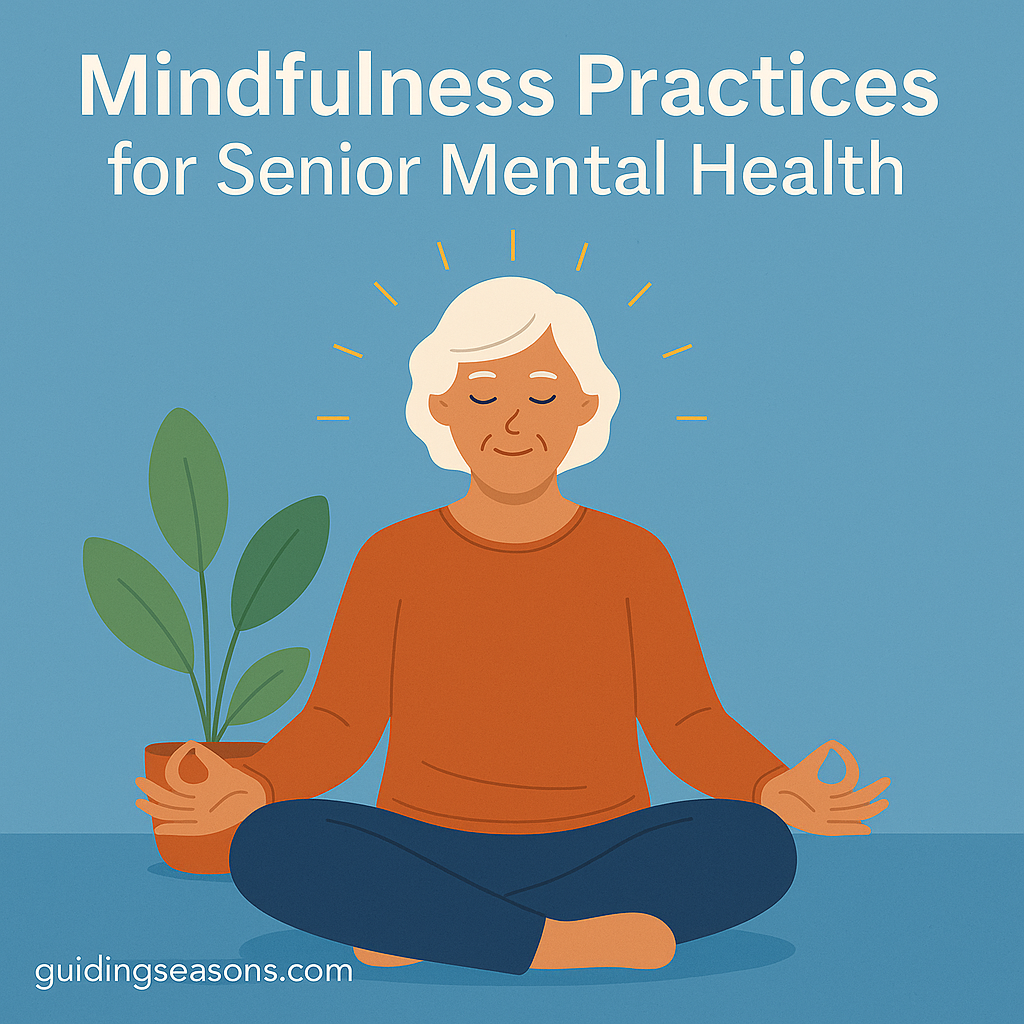
Mindfulness Practices for Senior Mental Health

Older woman sitting cross-legged in a calm meditation pose with soft rays around her head and a plant beside her, with the title “Mindfulness Practices for Senior Mental Health” above and a guidingseasons.com watermark at the bottom.
An older woman practices mindful meditation, illustrating simple mindfulness techniques that support senior mental health.

Mindfulness is a simple practice that can support emotional well-being, stress management, and a greater sense of calm at any age. For older adults, it can be particularly useful during periods of change, uncertainty, loneliness, caregiving stress, health concerns, or adjustments to retirement and daily routines.

At its core, mindfulness means intentionally paying attention to what is happening in the present moment without immediately judging the experience. Instead of becoming caught up in worries about tomorrow or repeatedly thinking about something that happened yesterday, mindfulness encourages you to notice what is happening right now.

That might mean paying attention to your breathing, listening carefully to birds outside your window, noticing the warmth of a cup of tea in your hands, or simply recognizing that you are feeling anxious without criticizing yourself for feeling that way.

Mindfulness does not require special equipment, expensive classes, or hour-long meditation sessions. A few minutes can be enough to begin developing the habit.

Research also suggests potential mental health benefits. According to the National Center for Complementary and Integrative Health (NCCIH), mindfulness-based practices may help with symptoms of anxiety and depression, although research varies depending on the technique and condition being studied. Mindfulness should therefore be viewed as a supportive wellness practice rather than a replacement for professional mental health treatment when it is needed.

Continue reading “Mindfulness Practices for Senior Mental Health”

How to Optimize Your Retirement Savings

Older man sitting at a table reviewing retirement savings with a laptop, chart paper, and money icons beside him, with the title “How to Optimize Your Retirement Savings” and a guidingseasons.com watermark at the bottom.
An older man plans his retirement savings with charts and a laptop, illustrating smart ways to optimize retirement income.

Preparing for retirement is about more than simply accumulating as much money as possible. It is also about making thoughtful decisions about how you save, invest, spend, and eventually withdraw that money.

Whether retirement is still several years away or you have already left the workforce, optimizing your retirement savings can help you make better use of the resources you have built. The goal is not necessarily to find the highest-return investment or eliminate every expense. Instead, a strong retirement strategy balances growth, income, taxes, risk, and flexibility.

Small adjustments can make a meaningful difference over a retirement that may last 20, 25, or even 30 years. Here are several practical ways to strengthen your retirement savings strategy.

Continue reading “How to Optimize Your Retirement Savings”

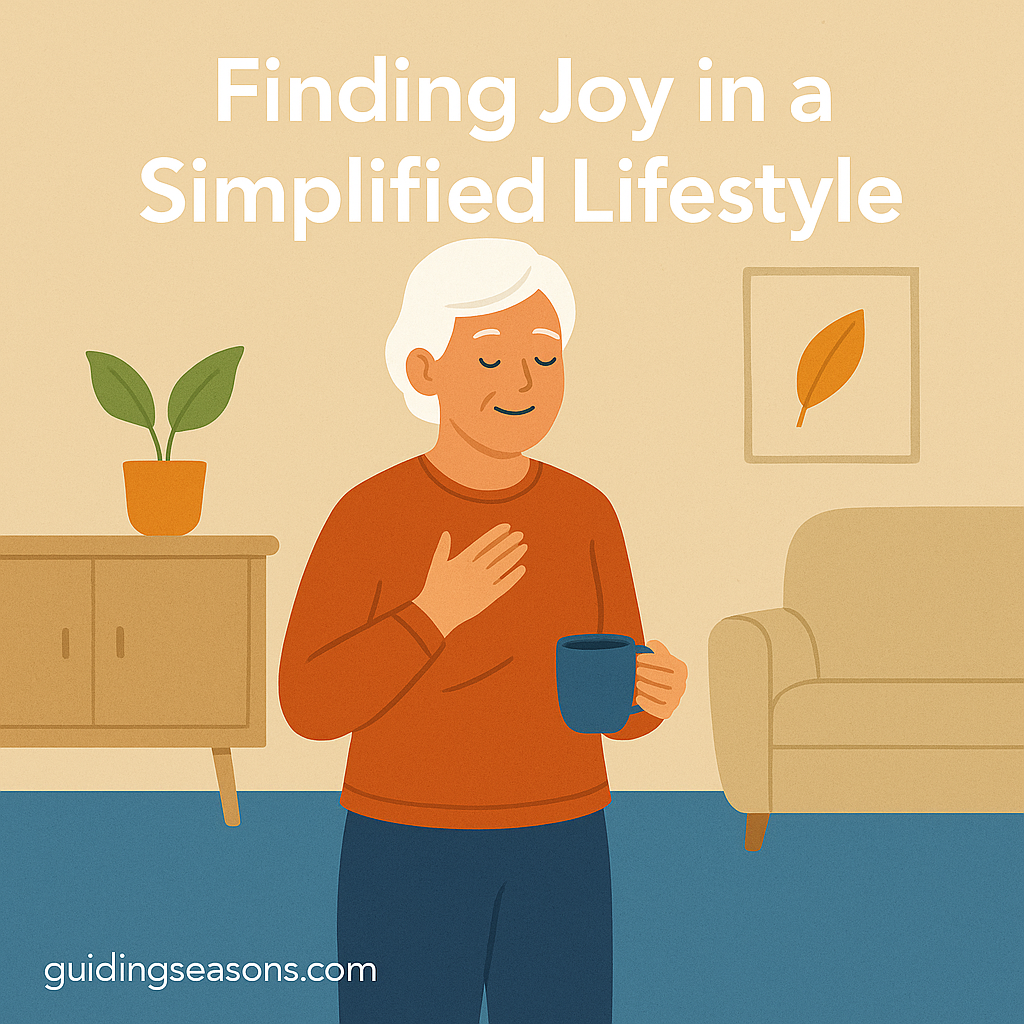
Finding Joy in a Simplified Lifestyle

Older woman enjoying a calm moment with a warm drink in a minimalist living room, with the title “Finding Joy in a Simplified Lifestyle” displayed above.
An older woman relaxes with a cup of tea in a simple, uncluttered living room, illustrating the peace and joy of a simplified lifestyle.

A simplified lifestyle isn’t necessarily about owning fewer things, giving up activities you enjoy, or living according to strict minimalist rules. At its heart, simplifying is about becoming more intentional with your time, belongings, relationships, and energy.

As you move through different seasons of life, your priorities naturally change. Things that once seemed important may no longer deserve as much attention. A packed schedule may become less appealing. Possessions accumulated over decades may begin to feel more like responsibilities than comforts. You may simply find yourself wanting more room to enjoy ordinary life.

Simplifying can help create that room.

It might mean clearing an overcrowded kitchen cabinet, reducing commitments that leave you exhausted, spending less time scrolling through your phone, or developing a peaceful morning routine. Small changes can make everyday life feel more manageable without requiring you to completely reinvent it.

Research also suggests that our physical and social environments can influence well-being. The American Psychological Association has discussed research connecting clutter with stress and anxiety, highlighting how an overabundance of possessions can contribute to feelings of disorder and overwhelm.

The goal, however, isn’t to create a perfectly organized home or an empty calendar.

It’s to make enough space for the people, activities, and experiences that matter to you.

Continue reading “Finding Joy in a Simplified Lifestyle”

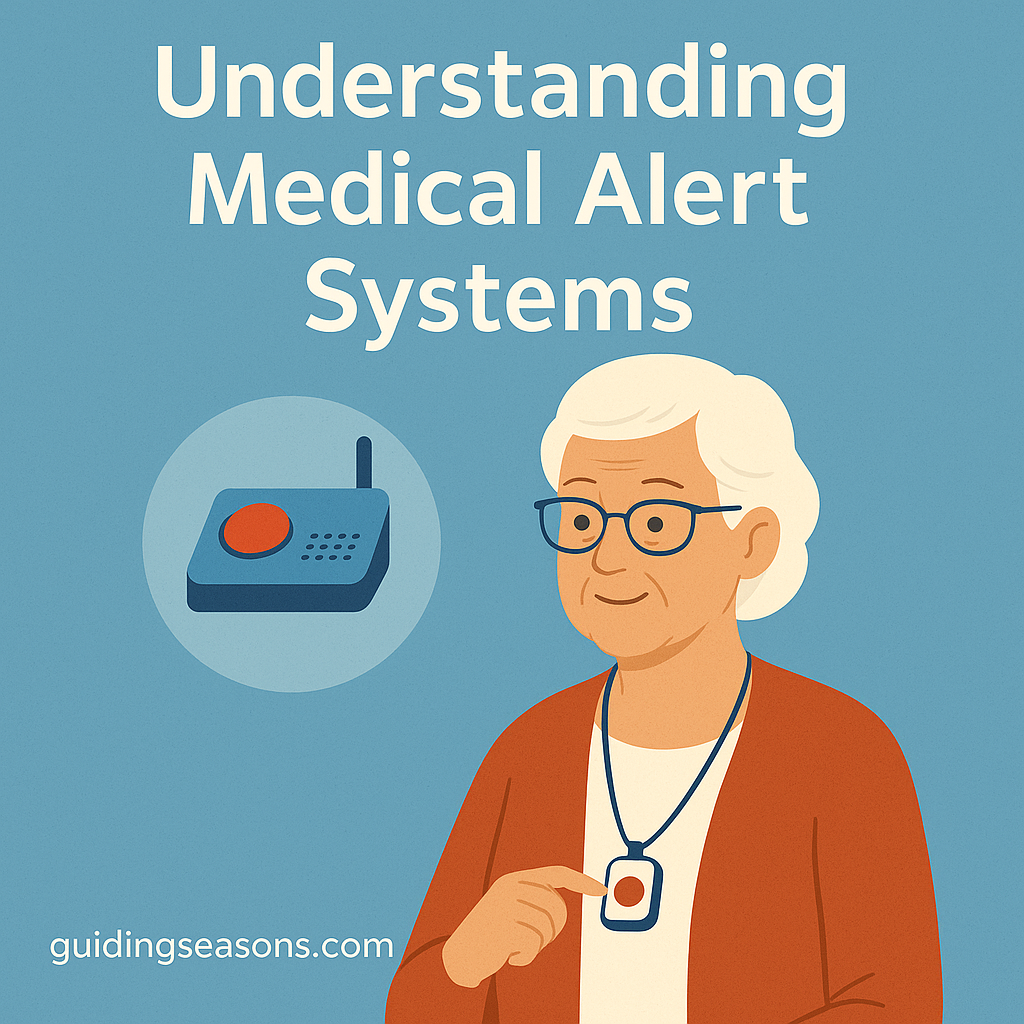
Understanding Medical Alert Systems

Older woman pressing a medical alert pendant with a base unit shown beside her, the title “Understanding Medical Alert Systems”.
An older woman demonstrates how a medical alert pendant works, illustrating key features of medical alert systems for seniors.

A medical alert system can provide an added layer of safety for older adults who live alone, have mobility concerns, or simply want a faster way to call for help during an emergency.

These systems are designed to make it easier to reach emergency responders, family members, neighbors, or a professional monitoring center when something goes wrong. Depending on the system, help may be available at home, outdoors, or while traveling.

For many people, the biggest benefit is not that they expect to use the system every day. It is knowing that assistance may be easier to reach if a fall, sudden illness, or other emergency occurs.

The National Institute on Aging notes that emergency medical alert systems, fall monitors, and GPS tracking devices can be useful for older adults who live alone or may be at risk of becoming sick, falling, or getting lost. It also emphasizes that these systems need to be set up correctly, worn consistently, and kept charged or supplied with fresh batteries to be useful.

Understanding how these systems work—and what they cannot do—can help you choose one that fits your actual needs rather than simply buying the device with the longest feature list.

Continue reading “Understanding Medical Alert Systems”